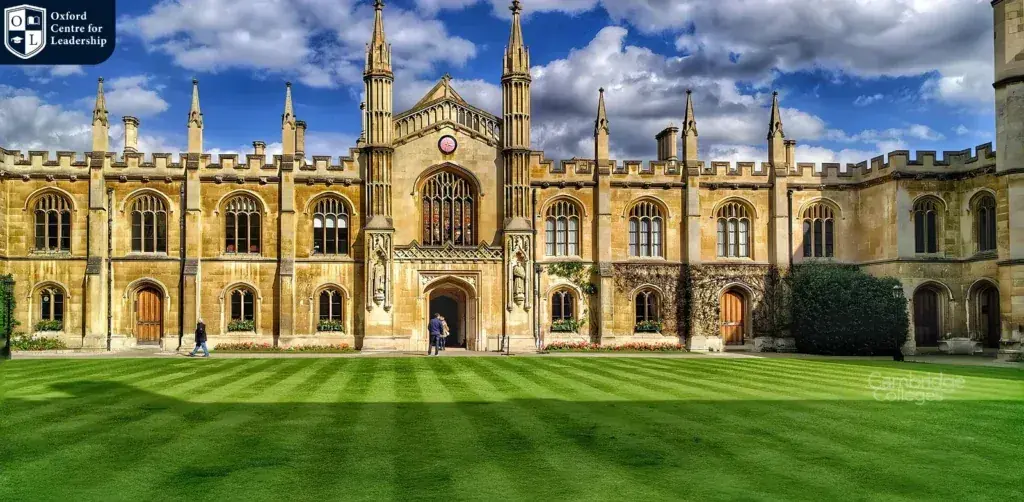
A residential programme in a Cambridge college for aspiring lawyers: LNAT preparation and mock Oxbridge interviews for school students, and arbitration, advocacy and mooting for law undergraduates.
From admissions and foundations, through the disciplines of contemporary practice, to advocacy, technology and the future of the profession.
Entry into Oxbridge
Course and college choice, the architecture of a strong personal statement, and building a competitive application.
LNAT preparation
Multiple-choice reasoning and the essay paper, with practice papers, structured feedback and individual coaching.
The admissions interview
Mock interviews with senior practitioners and academics, building composure and the habit of thinking aloud.
Postgraduate pathways
For older participants: the BCL, MJur, LLM, MCL and MSc in Law and Finance, and how competitive applications are judged.
The English legal system
The constitutional structure, the courts, the doctrine of precedent and the features of the common-law tradition.
Comparative criminal justice
English and Indian criminal justice compared: prosecutorial independence, judicial appointments and restorative justice.
Public international law
Sources of international law, the UN system, the International Court of Justice and today’s pressing questions.
Government, policy & institutional design
Where law, policy and political institutions meet, and the constitutional questions of mature democracies.
International commercial arbitration
ICC, LCIA, SIAC and HKIAC; the UNCITRAL Model Law; an arbitration from notice to award, with an introduction to investor-state disputes.
Alternative dispute resolution
Commercial mediation, the Singapore Convention and online dispute resolution.
Drafting arbitration clauses
Sound arbitration agreements, avoiding pathological wording, and choosing seat, language and law.
Recognition & enforcement
The New York Convention, the ICSID regime and the public-policy defences to enforcement.
Mooting, to a competitive final
Oral advocacy, building a legal argument and handling judicial questions, culminating in a Mooting Final judged by guest practitioners.
The Oxbridge debating tradition
Oxford Union-style debating to build confidence, agility and the habits of public argument.
AI in legal practice
How generative AI is reshaping research, review and drafting, and the ethical limits practitioners must observe.
The Bar and solicitors’ profession
The two branches of the English profession and the Bar Practice Course and SQE routes.
Institutional visits
The tradition, encountered first-hand
Cambridge Crown CourtA briefed tour of the city’s working criminal court.
Faculty of Law, CambridgeIncluding the Squire Law Library.
Royal Courts of JusticeHome of the High Court and Court of Appeal, London.
The Inns of CourtLincoln’s Inn, Middle Temple, Inner Temple and Gray’s Inn.
Oxford Centre for LeadershipCertificate of CompletionThis is to certify thatParticipant Namehas successfully completedThe Cambridge Law ProgrammeCambridge · Summer 2027OCL
Illustrative design
Recognition
An achievement worth putting on record
Every participant who successfully completes the programme is awarded a Certificate of Completion from the Oxford Centre for Leadership.
For university applications. A clear demonstration of commitment to law, for a personal statement and interview.
For CVs and professional profiles. A distinguished addition for internships, vacation schemes and training contracts.
Earned, not simply attended. Awarded on successful completion of the programme, including the Mooting Final.
A limited number of merit scholarships are available for exceptional students. There is no separate scholarship application: every programme application is considered automatically on merit and potential.
School students preparing to apply for a law degree should choose the Oxbridge Law Applicant pathway (ages 15–18). Those already studying law at university should choose the Law Undergraduate pathway (ages 18–23). The application form suggests a pathway based on date of birth.
What is not included in the fee?
International flights to and from the UK
UK visa application fees
Personal medical and travel insurance
Personal expenses outside the programme
How are under-18s supervised?
Resident deans live on site and provide 24/7 supervision, all staff are DBS-checked, and parents have access to a 24-hour line. Read our information for parents.
Where will participants stay?
In single-occupancy rooms within a Cambridge college, with access to the dining hall, libraries and study spaces.
Is a UK visa required?
This depends on nationality. Once a place is confirmed, we can provide documentation to support the visa application.
All applications are reviewed by the selection committee, and eligible candidates are considered for scholarship support on merit and potential. No separate application is required.
24 – 31 July 2027 · Cambridge
Gain the Cambridge advantage
Sharpen an Oxbridge application, build real advocacy experience and finish with recognition from the Oxford Centre for Leadership.